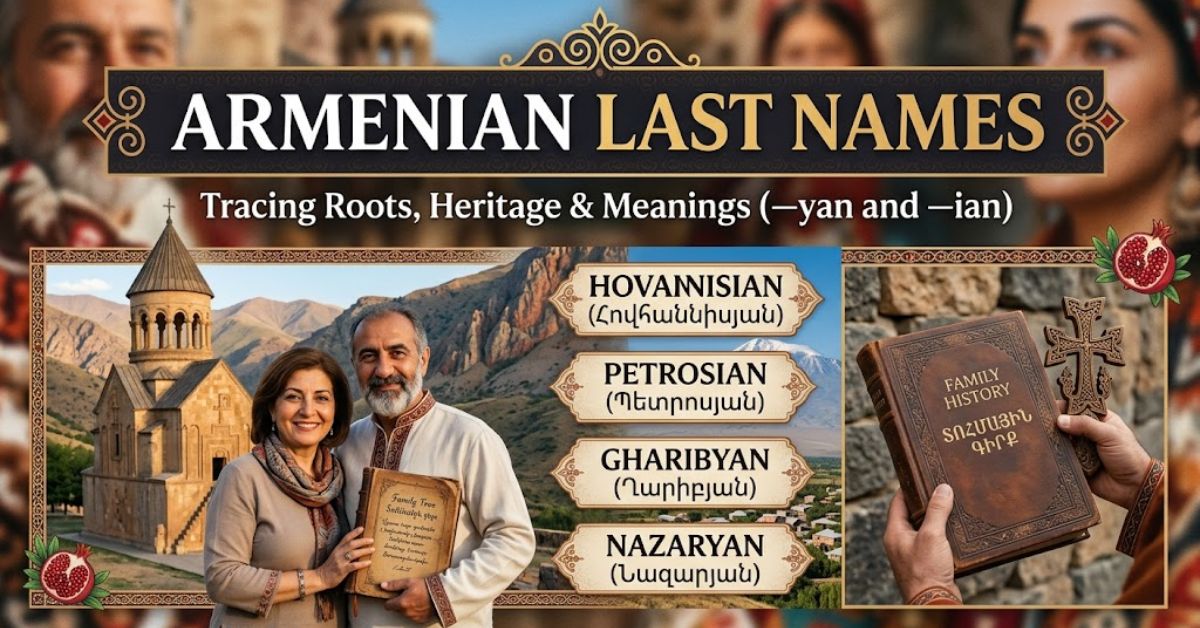
Some family names tell a story that goes back hundreds of years, and Armenian last names are a great example. Their spellings, meanings, and endings often reflect family heritage, regional roots, and traditions that have been passed down through generations.
Understanding these surnames can make it easier to recognize their origins and appreciate the history behind them. You’ll discover common and unique Armenian last names, what they mean, and the naming patterns that make them stand out, giving you a clearer picture of their cultural significance.
What Makes Armenian Last Names Unique?
Armenian last names are closely connected to family history, language, and cultural identity. Many surnames have been passed down for generations, preserving details about a family’s ancestors, profession, hometown, or personal qualities. While some names have changed slightly over time because of migration or different spelling systems, many still reflect their original Armenian roots.
One feature that makes Armenian last names easy to recognize is their distinctive endings. These endings often reveal how a surname was formed and can provide clues about a family’s background.
The Meaning of the ian and yan Suffixes
The endings ian and yan are the most common features of Armenian surnames. Both generally indicate family descent and are often understood to mean “belonging to” or “descendant of.” The difference between the two is mostly a matter of spelling and pronunciation rather than meaning.
Here are some well known examples:
| Last Name | General Meaning or Origin |
| Petrosyan | Descendant of Petros |
| Harutyunyan | Descendant of Harutyun |
| Grigoryan | Descendant of Grigor |
| Hakobyan | Descendant of Hakob |
| Sarkisian | Descendant of Sarkis |
| Karapetyan | Descendant of Karapet |
| Avetisyan | Descendant of Avetis |
| Martirosyan | Descendant of Martiros |
| Hovhannisyan | Descendant of Hovhannes |
| Baghdasarian | Descendant of Baghdasar |
Although English spellings may vary between ian and yan, they usually represent the same traditional naming pattern.
Other Armenian Surname Endings and Their Origins
While ian and yan are the best known endings, they are not the only ones found in Armenian family names. Historical influences, regional traditions, and language changes have led to several other surname forms.
Here are some examples of Armenian surnames with different endings:
| Last Name | Notable Feature |
| Melikyan | Linked to the historical title Melik |
| Ter Petrosyan | Begins with Ter, often associated with church heritage |
| Chilingirian | Derived from an occupational root |
| Parseghov | Uses an ending influenced by neighboring languages |
| Arslanian | Based on a personal or descriptive root |
| Amiryan | Connected to an old title or name |
| Topchian | Built from a historical occupational term |
| Nalbandian | Originates from a traditional craft |
| Demirjian | Associated with metalworking traditions |
| Khachadourian | Formed from the personal name Khachadur |
Some of these endings became more common in certain regions or during different historical periods, making Armenian surnames especially rich in variety.
How Armenian Last Names Are Formed
Many Armenian surnames began with a simple way of identifying a family. Some were based on an ancestor’s first name, while others came from a profession, hometown, title, or even a personal characteristic. As generations passed, these names became permanent family surnames.
Understanding how these names were created helps explain why so many Armenian last names share similar patterns while still having unique meanings.
Patronymic (Family Lineage) Surnames
Patronymic surnames are among the oldest and most common types in Armenian naming traditions. They are created from the given name of an ancestor, helping preserve a family’s lineage across generations.
Examples include:
| Last Name | Family Connection |
| Petrosyan | Family of Petros |
| Hovhannisyan | Family of Hovhannes |
| Grigoryan | Family of Grigor |
| Hakobyan | Family of Hakob |
| Avetisyan | Family of Avetis |
| Harutyunyan | Family of Harutyun |
| Karapetyan | Family of Karapet |
| Baghdasarian | Family of Baghdasar |
| Martirosyan | Family of Martiros |
| Sarkisian | Family of Sarkis |
These surnames highlight the importance of ancestry and show how family identity has remained a central part of Armenian culture.
Occupation Based Last Names
Some Armenian surnames developed from the work an ancestor performed. These names often reflected respected trades that were important to local communities and were eventually passed down as family names.
Here are several examples:
| Last Name | Traditional Occupation |
| Nalbandian | Farrier or horseshoe maker |
| Demirjian | Blacksmith or metalworker |
| Chilingirian | Locksmith |
| Topchian | Cannon maker or artillery worker |
| Boyajian | Dyer of fabrics |
| Kazanjian | Maker of copper pots |
| Kuyumjian | Jeweler or goldsmith |
| Mumjian | Candle maker |
| Semerjian | Saddle maker |
| Basmadjian | Printer or textile stamper |
Occupation based surnames offer a glimpse into the everyday lives and skilled trades that helped shape Armenian communities over the centuries.
Geographic and Place Based Surnames
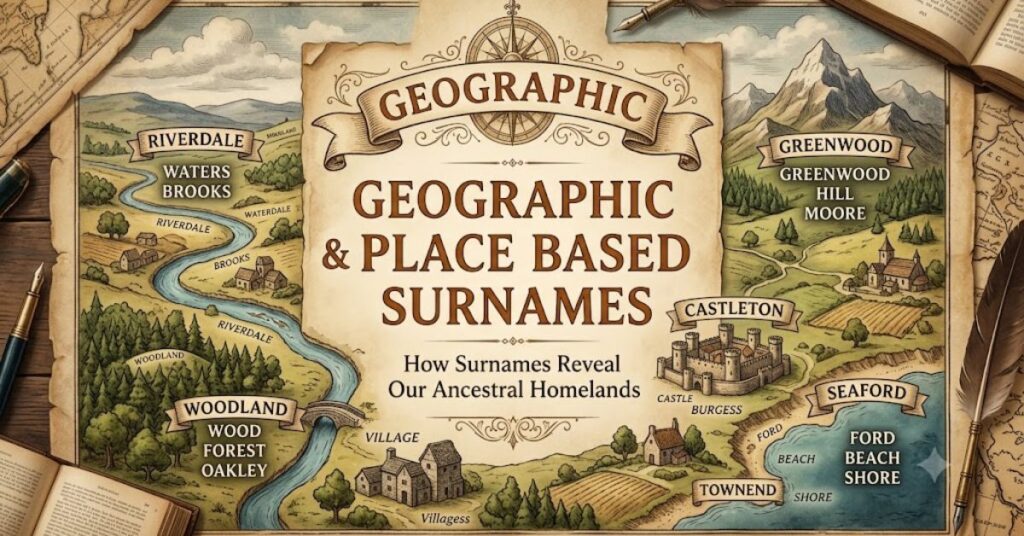
Many Armenian surnames are connected to places where a family once lived or came from. These names often preserve the memory of a village, town, region, or historical homeland, making them valuable for tracing family origins.
Here are some examples of place based Armenian surnames:
| Last Name | Geographic Connection |
| Vanetsyan | Associated with the historic city of Van |
| Karinian | Linked to the historic region of Karin |
| Sebastatsi | Connected to Sebastia |
| Shirakyan | Related to the Shirak region |
| Artsruni | Historically associated with the Vaspurakan area |
| Mushyan | Connected to the historic city of Mush |
| Karsyan | Linked to the Kars region |
| Erzrumian | Connected to Erzurum |
| Arabkirian | Associated with Arabkir |
| Zeytunian | Linked to the historic town of Zeytun |
These surnames reflect the importance of homeland and regional identity. Even after families moved to different countries, many continued to carry names that honored their place of origin.
Characteristic or Trait Based Surnames
Some Armenian surnames began as descriptions of a person’s appearance, personality, or notable qualities. Over time, these descriptions became permanent family names that were passed from one generation to the next.
Examples include:
| Last Name | Possible Association |
| Arslanian | Lion, symbolizing courage or strength |
| Medzorian | Associated with greatness or size |
| Sirunyan | Connected with beauty or grace |
| Khachatrian | Derived from a personal characteristic linked to the name Khachatur |
| Azadian | Connected with freedom |
| Pahlavuni | Associated with bravery or heroism |
| Barseghyan | Originates from the personal name Barsegh |
| Keshishian | Connected with a respected title that later became a surname |
| Amiryan | Associated with leadership or status |
| Shahbazian | Related to the image of a royal falcon |
Not every surname has a single accepted meaning, but many reflect qualities that families admired or wished to preserve.
See also: 310+ Unique Boy Names Bold Ideas For Modern Parents
Religious and Historical Influences
Religion and history have played a major role in shaping Armenian family names. Many surnames originated from saints’ names, church titles, or historical figures, reflecting the strong influence of Christianity and centuries of Armenian tradition.
Some examples include:
| Last Name | Historical or Religious Connection |
| Ter Petrosyan | Begins with Ter, often linked to priestly families |
| Khachadourian | Derived from the name Khachatur, meaning bearer of the cross |
| Sarkisian | Based on Saint Sarkis |
| Grigoryan | Derived from Gregory, an important Christian name |
| Hovhannisyan | Based on Hovhannes, the Armenian form of John |
| Martirosyan | Derived from Martiros, meaning martyr |
| Harutyunyan | Connected with resurrection |
| Karapetyan | Based on Karapet, a title linked to John the Baptist |
| Hakobyan | Derived from Hakob, the Armenian form of Jacob |
| Stepanian | Based on Stepan, the Armenian form of Stephen |
These surnames show how faith, history, and family traditions have remained closely connected throughout Armenian culture.
Common Armenian Last Names and Their Meanings
Many Armenian last names have remained popular for generations because they are rooted in family lineage, respected personal names, or historical traditions. While spellings may vary across countries, their meanings often stay connected to the same family heritage.
Below are some of the most common Armenian last names and their general meanings:
| Last Name | Meaning or Origin |
| Hovhannisyan | Descendant of Hovhannes |
| Grigoryan | Descendant of Grigor |
| Harutyunyan | Descendant of Harutyun |
| Petrosyan | Descendant of Petros |
| Hakobyan | Descendant of Hakob |
| Karapetyan | Descendant of Karapet |
| Avetisyan | Descendant of Avetis |
| Sarkisian | Descendant of Sarkis |
| Martirosyan | Descendant of Martiros |
| Baghdasarian | Descendant of Baghdasar |
These surnames are widely recognized within Armenian communities and continue to represent family identity across the world.
Popular Armenian Last Names for Men
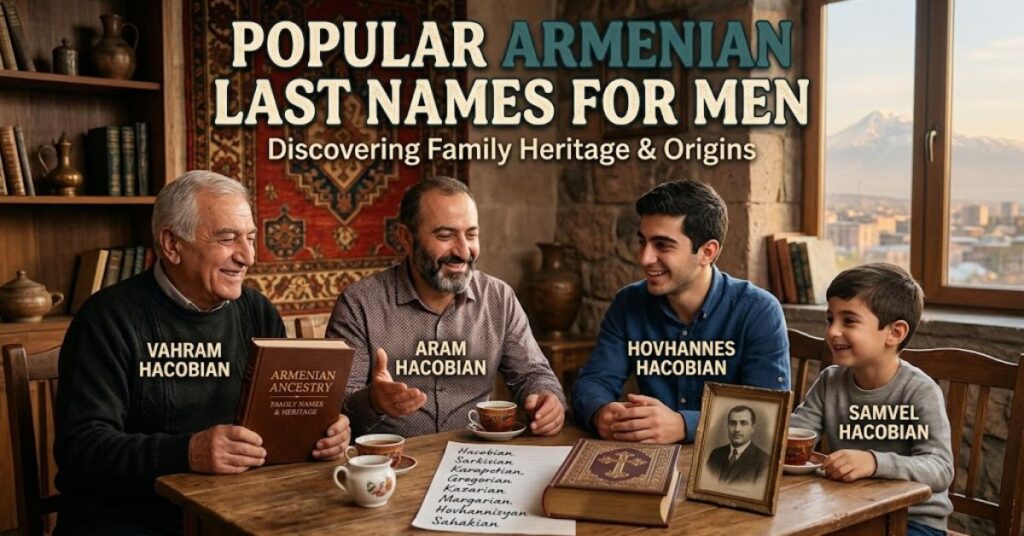
Although Armenian surnames are shared by all members of a family regardless of gender, some are commonly seen alongside traditional Armenian male given names. The list below highlights well known family names often associated with men in historical records and modern usage.
| Last Name | Common Association |
| Hovhannisyan | Family name linked with Hovhannes |
| Petrosyan | Descendants of Petros |
| Grigoryan | Family of Grigor |
| Harutyunyan | Family of Harutyun |
| Hakobyan | Family of Hakob |
| Karapetyan | Family of Karapet |
| Sarkisian | Family connected to Sarkis |
| Avetisyan | Descendants of Avetis |
| Martirosyan | Family of Martiros |
| Stepanian | Family connected to Stepan |
These surnames remain among the most recognizable Armenian family names and continue to appear across Armenia and Armenian communities around the world.
Popular Armenian Last Names for Women
Armenian surnames are generally the same for men and women because family names are shared across generations. Even so, many of these surnames are commonly seen alongside traditional Armenian female given names in family records and everyday life.
Here are some popular Armenian last names often associated with women:
| Last Name | General Origin |
| Hovhannisyan | Descendant of Hovhannes |
| Grigoryan | Descendant of Grigor |
| Petrosyan | Descendant of Petros |
| Harutyunyan | Descendant of Harutyun |
| Hakobyan | Descendant of Hakob |
| Karapetyan | Descendant of Karapet |
| Avetisyan | Descendant of Avetis |
| Sarkisian | Descendant of Sarkis |
| Martirosyan | Descendant of Martiros |
| Baghdasarian | Descendant of Baghdasar |
The same surname can be used by every member of a family, making Armenian naming traditions different from cultures where surnames change based on gender.
May you like also: 180+ Uncommon Baby Names: Amazing Unique Ideas
Rare and Unique Armenian Last Names
Some Armenian surnames are less common because they originated in specific regions, belonged to smaller family lines, or preserved older naming traditions. These names often stand out because of their distinctive sound or historical background.
Here are a few rare and unique Armenian last names:
| Last Name | Notable Feature |
| Pahlavuni | Connected with an ancient noble house |
| Artsruni | Historic Armenian family name |
| Rshtuni | Associated with an old regional dynasty |
| Mamikonian | Linked to a famous noble lineage |
| Orbelian | Connected with medieval Armenian nobility |
| Proshian | Derived from a historic princely family |
| Gnunian | Traditional family name with historical roots |
| Vahevuni | Ancient Armenian clan name |
| Mandakuni | Historic noble surname |
| Kamsarakan | Name of an early Armenian dynasty |
Many of these surnames are valued not only for their uniqueness but also for the historical stories connected to them.
Noble and Aristocratic Armenian Family Names
Throughout Armenian history, several powerful families played important roles in politics, military leadership, and cultural development. Their surnames continue to be recognized as symbols of historical influence.
Some well known noble Armenian family names include:
| Last Name | Historical Significance |
| Mamikonian | Influential military and noble family |
| Bagratuni | Royal dynasty that ruled parts of Armenia |
| Artsruni | Noble house of Vaspurakan |
| Orbelian | Medieval princely family |
| Pahlavuni | Aristocratic Armenian lineage |
| Proshian | Noble family of medieval Armenia |
| Kamsarakan | Early noble dynasty |
| Rshtuni | Historic ruling family |
| Vahevuni | Ancient Armenian noble house |
| Gnunian | Traditional aristocratic lineage |
These names appear in historical records and remain an important part of Armenia’s cultural heritage.
Funny or Unusual Armenian Last Names
Some Armenian surnames may sound unusual or amusing to people who are unfamiliar with the language. Their pronunciation, spelling, or literal meaning can seem unexpected, even though they often have perfectly ordinary historical origins.
Here are several distinctive Armenian surnames:
| Last Name | Why It Stands Out |
| Nalbandian | Derived from the trade of horseshoe making |
| Boyajian | Connected with fabric dyeing |
| Chilingirian | Originated from locksmithing |
| Mumjian | Traditionally linked with candle making |
| Kazanjian | Associated with copper pot making |
| Kuyumjian | Connected with jewelry craftsmanship |
| Topchian | Linked with historical artillery work |
| Basmadjian | Related to printing or textile stamping |
| Demirjian | Traditionally associated with blacksmithing |
| Semerjian | Connected with saddle making |
These names are unusual because of their origins or pronunciation, not because they were intended to be humorous. Their meanings often reflect respected professions from earlier generations.
Also read: 250+ Serbian Names With Meanings for Boys and Girls
Famous Armenian Family Names Around the World
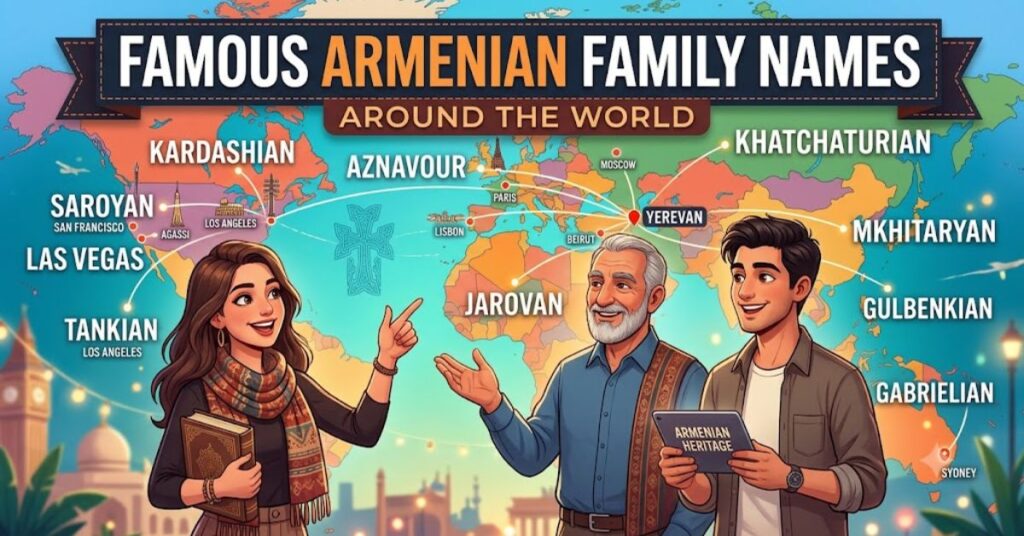
Armenian surnames can be found across many countries thanks to centuries of migration and strong family traditions. Some are known through history, while others have become familiar because of achievements in business, science, sports, entertainment, and the arts.
Historical Families
Several Armenian family names have been remembered for their leadership and lasting influence on the country’s history.
| Family Name | Historical Importance |
| Bagratuni | Royal ruling dynasty |
| Mamikonian | Military leaders and nobles |
| Artsruni | Rulers of Vaspurakan |
| Orbelian | Medieval princely family |
| Pahlavuni | Influential noble house |
| Proshian | Regional rulers during the Middle Ages |
| Kamsarakan | Early Armenian dynasty |
| Rshtuni | Historic ruling family |
| Vahevuni | Ancient noble lineage |
| Gnunian | Traditional aristocratic family |
Modern Well Known Armenian Surnames
Many Armenian surnames are now recognized internationally because of the accomplishments of people in different fields.
| Family Name | Common Recognition |
| Kardashian | Entertainment and media |
| Cher | Music and performing arts |
| Tankian | Rock music |
| Agassi | Professional sports |
| Aznavour | Music and songwriting |
| Simonyan | Common surname in public life |
| Abrahamyan | Widely recognized Armenian family name |
| Sargsyan | Frequently seen in politics and public service |
| Petrosyan | Common surname in sports and culture |
| Harutyunyan | Well known across Armenian communities |
These family names illustrate how Armenian heritage has reached audiences around the world while continuing to reflect strong cultural and family connections.
Armenian Last Name Traditions and Naming Culture
Armenian naming traditions have developed over many centuries and remain an important part of the country’s cultural identity. Most family names are inherited from one generation to the next, helping preserve family history and ancestry. Many surnames reflect a family’s roots through an ancestor’s name, occupation, place of origin, or religious connection.
Although Armenian communities now live around the world, many families have kept their traditional surnames. This has helped maintain a strong connection to Armenian heritage even after migration to different countries.
How Surnames Have Changed Over Time
Like many cultures, Armenian surnames have evolved because of historical events, migration, and language differences. Families who settled in different regions often adjusted the spelling of their surnames to match local alphabets or pronunciation while keeping the same family identity.
Some common changes include:
| Traditional Form | Possible Variation |
| Petrosyan | Petrossian |
| Sarkisyan | Sarkisian |
| Hovhannisyan | Hovhannisian |
| Harutyunyan | Haroutunian |
| Grigoryan | Grigorian |
| Karapetyan | Karapetian |
| Avetisyan | Avetissian |
| Hakobyan | Hagopian |
| Baghdasaryan | Bagdasarian |
| Martirosyan | Martirossian |
These differences usually reflect transliteration rather than a change in family heritage. The surname’s origin often remains the same despite the different spelling.
Regional Variations in Armenian Surnames
Regional history has also influenced how Armenian surnames developed. Families from different parts of historic Armenia sometimes used local words, pronunciations, or naming customs that made their surnames unique.
Here are a few examples of regional influences:
| Region or Area | Example Surname |
| Van | Vanetsyan |
| Karin | Karinian |
| Shirak | Shirakyan |
| Mush | Mushyan |
| Kars | Karsyan |
| Erzurum | Erzrumian |
| Arabkir | Arabkirian |
| Sebastia | Sebastatsi |
| Zeytun | Zeytunian |
| Vaspurakan | Artsruni |
These regional variations add depth to Armenian surnames and can provide useful clues when exploring a family’s ancestral origins.
Tips for Researching Armenian Family Names
Researching Armenian family names can reveal valuable information about your family’s history and cultural background. Since spellings have changed over time, it helps to compare different records and remain open to alternate versions of the same surname.
Here are some practical tips to guide your research:
- Check for alternate spellings such as yan and ian endings.
- Ask older family members about names, hometowns, and family stories.
- Search birth, marriage, and immigration records whenever possible.
- Compare records written in different languages or alphabets.
- Learn the meaning behind your surname to better understand its origin.
- Pay attention to occupations or places connected to the family name.
- Explore local church or community records if they are available.
- Build a family tree to organize names across generations.
- Look for historical maps that match your family’s place of origin.
- Verify information using multiple reliable sources instead of relying on a single record.
Frequently Asked Questions
What do Armenian last names mean?
Many Armenian last names reflect a family’s history, ancestry, occupation, place of origin, or a respected ancestor’s first name. Their meanings often provide clues about how a family was identified generations ago.
Why do many Armenian last names end in ian or yan?
The endings ian and yan traditionally indicate family descent and are among the most recognizable features of Armenian surnames. They generally mean that the family is descended from or belongs to a particular ancestor.
What is the difference between ian and yan surnames?
There is very little difference in meaning between ian and yan. The variation is usually the result of different spelling systems, pronunciation, or transliteration into other languages rather than a difference in family origin.
What are the most common Armenian last names?
Some of the most widely recognized Armenian surnames include Hovhannisyan, Grigoryan, Petrosyan, Harutyunyan, Hakobyan, Karapetyan, and Sarkisian. These names are commonly found both in Armenia and among Armenian communities around the world.
Are Armenian last names based on occupations?
Yes, some Armenian surnames originated from traditional professions. For example, family names connected to blacksmiths, jewelers, locksmiths, or saddle makers were often passed down through generations and eventually became permanent surnames.
How can you tell if a surname is Armenian?
A surname ending in ian or yan is often a strong sign of Armenian heritage. However, looking at the surname’s history, meaning, and family background can provide a more accurate understanding of its origin.
Do Armenian women change their last names after marriage?
There is no single rule that applies to every Armenian family. Some women adopt their spouse’s surname after marriage, while others keep their birth surname, depending on personal preference, family tradition, or the laws of the country where they live.
What are some rare Armenian last names?
Examples of less common Armenian surnames include Mamikonian, Artsruni, Orbelian, Pahlavuni, Proshian, and Kamsarakan. Many of these names have historical or noble connections and are less frequently encountered than modern family names.
Conclusion
Understanding Armenian last names gives you more than a list of family names. It offers a closer look at history, culture, and the traditions that have connected Armenian families for generations. From common surnames to rare historical names, each one carries a story worth knowing.
Whether you are researching your own family, exploring Armenian heritage, or simply curious about surname meanings, these names can provide meaningful insights. Keep this guide as a helpful reference, and share it with others who may enjoy discovering the stories behind Armenian last names.
Learn More:
340+ Unique Girl Names Rare Beautiful Picks You’ll Love
240+ Boy Names That Feel Modern And Timeless Picks
Santa’s Reindeer Names Meaning Order Explained Fast
200+ Girl Names: Picks Every Parent Will Love

Nameraft is a names-focused platform that provides unique name ideas, meaningful origins, and creative suggestions to help users discover the perfect identity for personal, cultural, and business use.