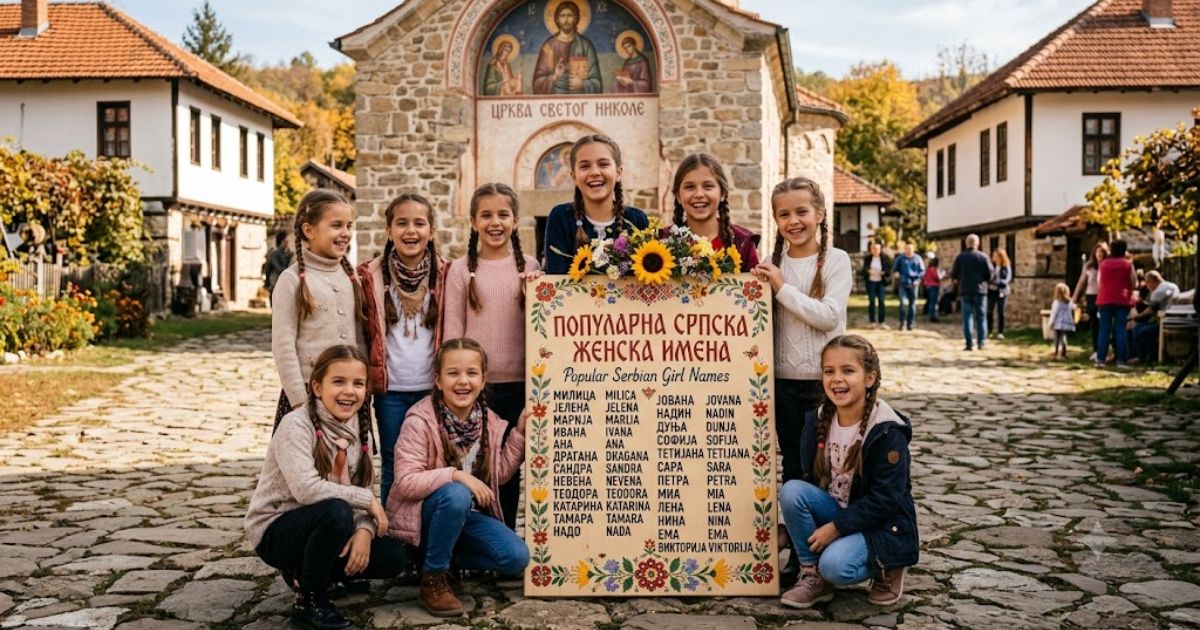
Names often tell the story of a family’s history, culture, and traditions, and Serbian names are no different. From timeless classics to modern favorites, many have meaningful origins that have been passed down through generations.
This guide brings together popular Serbian names for boys and girls, along with traditional, unique, and unisex options. You’ll also learn what many of these names mean and how Serbian naming traditions have influenced them over time.
Serbian Naming Traditions
Serbian naming traditions are deeply rooted in family heritage, Slavic culture, and Christian beliefs. Many children are named after grandparents or other respected relatives to honor their family’s history and keep traditions alive. Others receive names connected to saints or important religious celebrations.
Although naming trends have changed over the years, many traditional names remain popular because they reflect a strong cultural identity. At the same time, younger parents often choose shorter names that are easy to pronounce both in Serbia and abroad. This blend of tradition and modern style keeps Serbian names meaningful across generations.
What Do Serbian Names Mean?
Many Serbian names come from Slavic roots and express qualities such as love, peace, wisdom, strength, and hope. Others have Greek, Hebrew, or Latin origins and became part of Serbian culture through religion and history. For many families, a name’s meaning is just as important as the way it sounds.
Nature has also inspired many Serbian names, with meanings connected to flowers, stars, the dawn, and the changing seasons. Together, these influences have created a rich collection of names that combine history, culture, and personal meaning.
Popular Serbian Girl Names
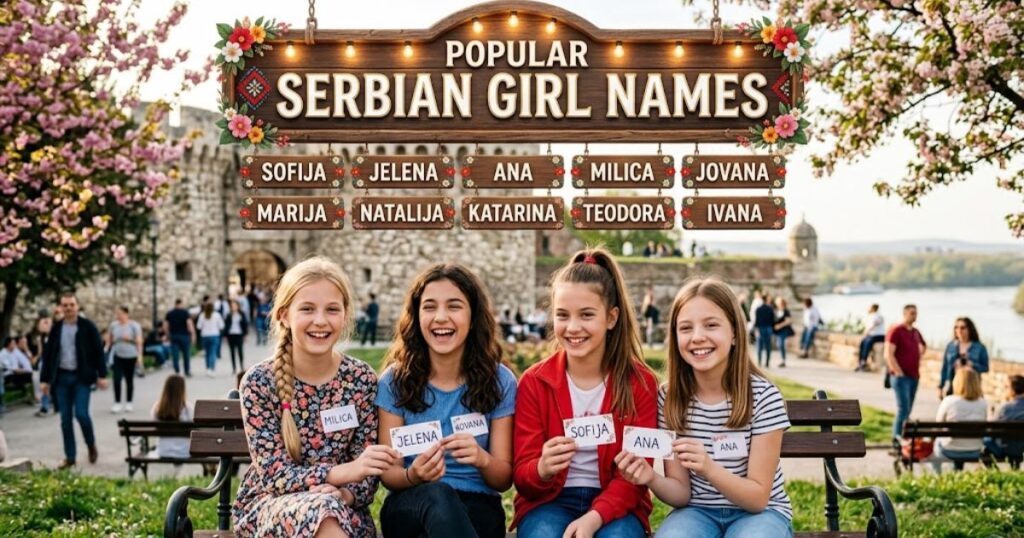
Serbian girl names are known for their beauty, history, and meaningful origins. Some have been used for centuries, while others have become more popular in recent years. Here are some of the most loved choices.
Traditional Serbian Girl Names
Milica means dear or beloved.
Jelena means shining light.
Dragana means beloved or precious.
Marija means beloved or wished for child.
Jovana means God is gracious.
Mirjana is associated with peace and harmony.
Ljubica means little love.
Danica means morning star.
Slavica means glory or fame.
Gordana is often linked with dignity and pride.
Modern Serbian Girl Names
Sofija means wisdom.
Mila means dear and beloved.
Sara means princess.
Teodora means gift of God.
Tara is inspired by nature and the name of a Serbian mountain.
Dunja is inspired by the quince fruit.
Maša is a familiar form of Marija.
Lenka is a cheerful short form of Jelena.
Lara is a stylish name that has become popular with younger families.
Ana means grace and is admired for its simple, timeless appeal.
May you like also: 180+ Uncommon Baby Names: Amazing Unique Ideas
Popular Serbian Boy Names
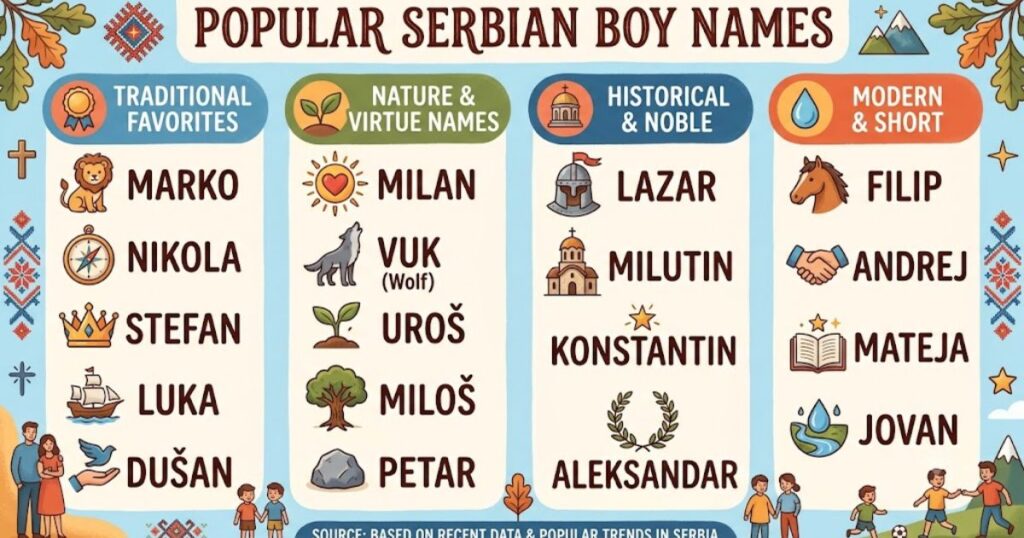
Serbian boy names are often associated with strength, faith, family values, and Slavic heritage. While many have been passed down through generations, others have grown in popularity because they are simple, modern, and easy to pronounce around the world. Here are some of the most popular choices.
Traditional Serbian Boy Names
Stefan means crown or crowned.
Nikola means victory of the people.
Marko means dedicated to Mars.
Lazar means God has helped.
Miloš means gracious or dear.
Vuk means wolf and is often associated with courage and strength.
Bogdan means gift of God.
Dušan means soul or spirit.
Petar means rock or stone.
Nemanja is a historic Serbian name closely linked to the country’s medieval past.
Modern Serbian Boy Names
Luka means light and remains one of the most popular modern Serbian names.
Mateja means gift of God.
Filip means lover of horses.
Pavle means humble or small.
Andrej means brave and manly.
David means beloved.
Viktor means winner or conqueror.
Aleksa means defender of the people.
Mihajlo means who is like God.
Ognjen means fiery and is admired for its bold character.
Unisex Serbian Names
Although Serbian names are traditionally divided into male and female categories, a few names are used for both genders. Many of these are shortened forms of longer names, while others have become more flexible in modern usage.
Saša is commonly used for both boys and girls.
Vanja is a familiar choice shared by both genders.
Bojan is occasionally used as a unisex name in modern settings.
Nika is a short, stylish name used for both boys and girls.
Mika is often used as a nickname for several different given names.
Lale is a friendly nickname that can suit either gender.
Beba is a playful nickname sometimes used regardless of gender.
Bane is a familiar short form found in different families.
Joca is an affectionate nickname that may be used for both boys and girls.
Aca is another popular nickname shared across different names.
May you like also: 340+ Unique Girl Names Rare Beautiful Picks You’ll Love
Unique Serbian Names
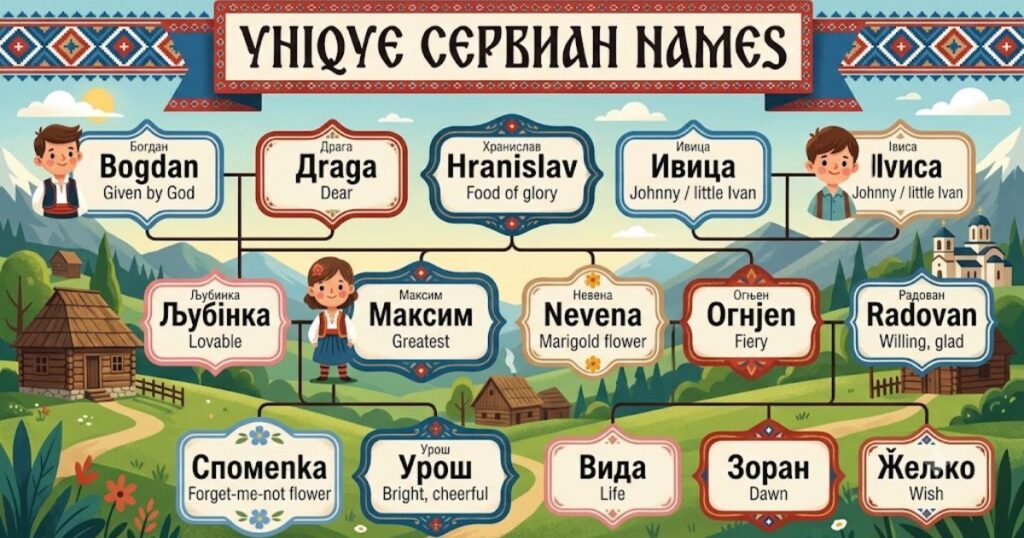
Some Serbian names stand out because they are rare, deeply traditional, or inspired by nature and old Slavic heritage. They offer something distinctive while still reflecting Serbia’s rich cultural identity.
Zvezdana means starry.
Ognena is connected with fire.
Vidak is linked with sight or vision.
Desimir combines the ideas of peace and desire.
Kosara is an old royal Serbian name.
Vidosava is associated with wisdom and clear vision.
Dobrosav means good glory.
Radmila means happy and dear.
Velibor means great battle.
Živorad means joyful life and work.
Old Serbian Names
Many old Serbian names have been passed down through generations and continue to reflect the country’s rich history and cultural heritage. Although some are less common today, they remain meaningful choices for families who value tradition and timeless names.
Old Serbian Names for Girls
Kosara is an early Serbian royal name with lasting historical importance.
Desislava means seeking glory.
Vidosava is associated with wisdom and clear vision.
Radmila means happy and dear.
Milena means gracious and beloved.
Ljubica means little love.
Draginja means precious or cherished.
Danica means morning star.
Zorica is inspired by the dawn.
Slavica means glory and honor.
Old Serbian Names for Boys
Nemanja is a historic Serbian name linked to medieval rulers.
Vlastimir means great ruler.
Mutimir is an ancient Serbian royal name.
Časlav means honor and glory.
Dobroslav means good glory.
Radovan means joyful.
Miroslav means peaceful glory.
Bogdan means gift of God.
Vuk means wolf and symbolizes bravery.
Dragomir means precious peace.
Serbian Nicknames
Nicknames are an important part of everyday life in Serbia and are commonly used by family members, friends, and classmates. Most are created by shortening a given name or using an affectionate variation, making conversations feel more personal and informal.
Saša is a common nickname for Aleksandar.
Aca is another popular short form of Aleksandar.
Mika is often used for Mihailo or Mihajlo.
Bane is a familiar nickname for Branislav.
Gaga is a playful nickname used for several different names.
Joca is commonly used for Jovan.
Pera is a friendly short form of Petar.
Žika is a nickname for Živorad and similar names.
Ceca is a well known nickname for Svetlana.
Maca is an affectionate nickname often used within families, especially for girls.
May you like also: 310+ Unique Boy Names Bold Ideas For Modern Parents
Serbian Last Names (Surnames)
Serbian surnames often reveal family heritage and have been passed down through generations. Most end with ić, a traditional suffix that generally means “son of” or “descendant of.” Many surnames also originated from a father’s given name, a profession, a personal characteristic, or a place of origin.
Here are some well known Serbian surnames.
Jovanović means descendant of Jovan.
Petrović means descendant of Petar.
Nikolić means descendant of Nikola.
Marković means descendant of Marko.
Stanković means descendant of Stanko.
Milošević means descendant of Miloš.
Đorđević means descendant of Đorđe.
Pavlović means descendant of Pavle.
Stefanović means descendant of Stefan.
Popović is traditionally associated with the family of a priest.
Most Popular Serbian Names Today
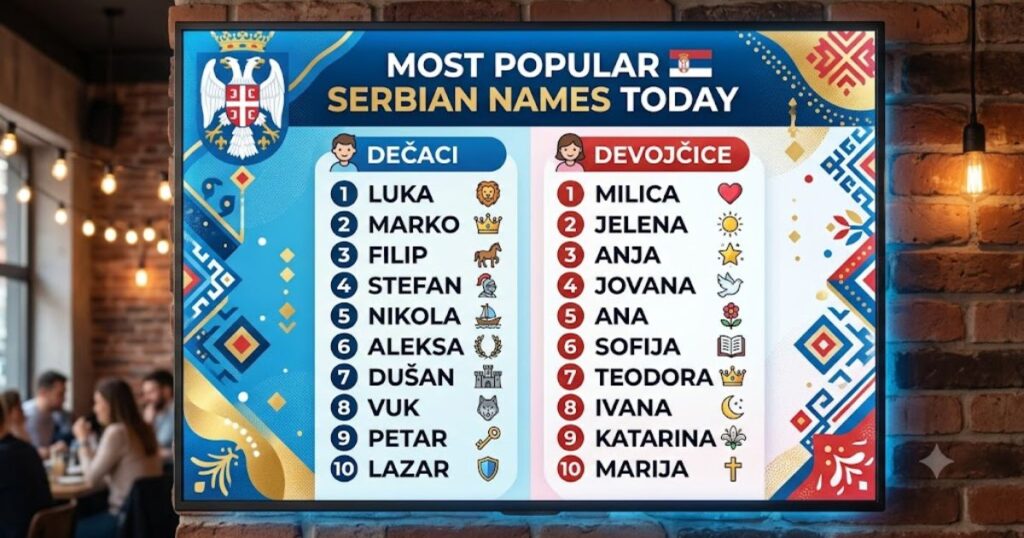
Modern Serbian families often choose names that balance tradition with simplicity. Many of today’s favorites have deep historical or religious roots while remaining easy to pronounce around the world. Their timeless appeal has helped them stay popular across generations.
Trending Serbian Girl Names
Sofija means wisdom.
Mila means dear and beloved.
Dunja is inspired by the quince fruit.
Sara means princess.
Teodora means gift of God.
Anastasija means resurrection.
Lena is a graceful and modern favorite.
Helena means shining light.
Una is inspired by the name of the beautiful river.
Ana means grace.
Trending Serbian Boy Names
Luka means light.
Vasilije means kingly or royal.
Stefan means crowned.
Nikola means victory of the people.
Vuk means wolf.
Mateja means gift of God.
Pavle means humble.
Aleksa means defender of the people.
Filip means lover of horses.
David means beloved.
Frequently Asked Questions
What makes Serbian names unique?
Many Serbian names have Slavic roots and carry meanings related to qualities such as strength, peace, love, and faith. They also reflect Serbia’s rich cultural and religious heritage, making them both meaningful and distinctive.
Why do so many Serbian last names end with ić?
The suffix ić is a traditional part of many Serbian surnames and usually means “son of” or “descendant of.” It is one of the most recognizable features of Serbian family names and has been used for generations.
Are Serbian names mostly Slavic?
Most traditional Serbian names have Slavic origins, although many also come from Greek, Hebrew, and Latin through Christian influence. This combination has created a diverse collection of names that remain popular today.
Can Serbian names be used outside Serbia?
Yes. Many Serbian names are easy to pronounce and are widely used by Serbian communities around the world. Names such as Luka, Nikola, Ana, and Sofija are also familiar in many other countries.
What are some classic Serbian names that are still popular?
Traditional names such as Stefan, Nikola, Milica, Marija, and Jovana continue to be widely used. Their lasting popularity comes from their rich history, meaningful origins, and timeless appeal.
Do Serbian names have specific meanings?
Yes. Many Serbian names are connected to positive qualities, nature, faith, or family values. Parents often consider both a name’s meaning and how it sounds before making their choice.
How are Serbian nicknames created?
Serbian nicknames are usually formed by shortening a given name or creating an affectionate variation. They are commonly used by family members, friends, and classmates in everyday conversation.
Are there modern Serbian names as well as traditional ones?
Yes. While many families still prefer classic names, modern Serbian parents also choose shorter and more internationally recognized options. This allows them to honor tradition while embracing contemporary naming trends.
Conclusion
Serbian names reflect a rich blend of history, culture, and family traditions, giving each name its own unique story and meaning. From classic favorites to modern choices, this collection offers plenty of inspiration while making it easier to compare different styles and meanings.
The right name is one that feels meaningful to you and suits your personal taste. Keep this guide handy whenever you need inspiration, and share it with friends or family who are also exploring beautiful Serbian names.

Nameraft is a names-focused platform that provides unique name ideas, meaningful origins, and creative suggestions to help users discover the perfect identity for personal, cultural, and business use.